See what an attacker sees
Every subdomain, port, technology and exposure you own — discovered, fingerprinted and correlated to CVEs.
You cannot defend assets you do not know exist. Shadow infrastructure and forgotten subdomains are where breaches start.
Four-source subdomain enumeration, port scanning, HTTP/TLS fingerprinting, certificate-transparency monitoring and proxy-aware CVE correlation — so you stop chasing CVEs in your CDN.
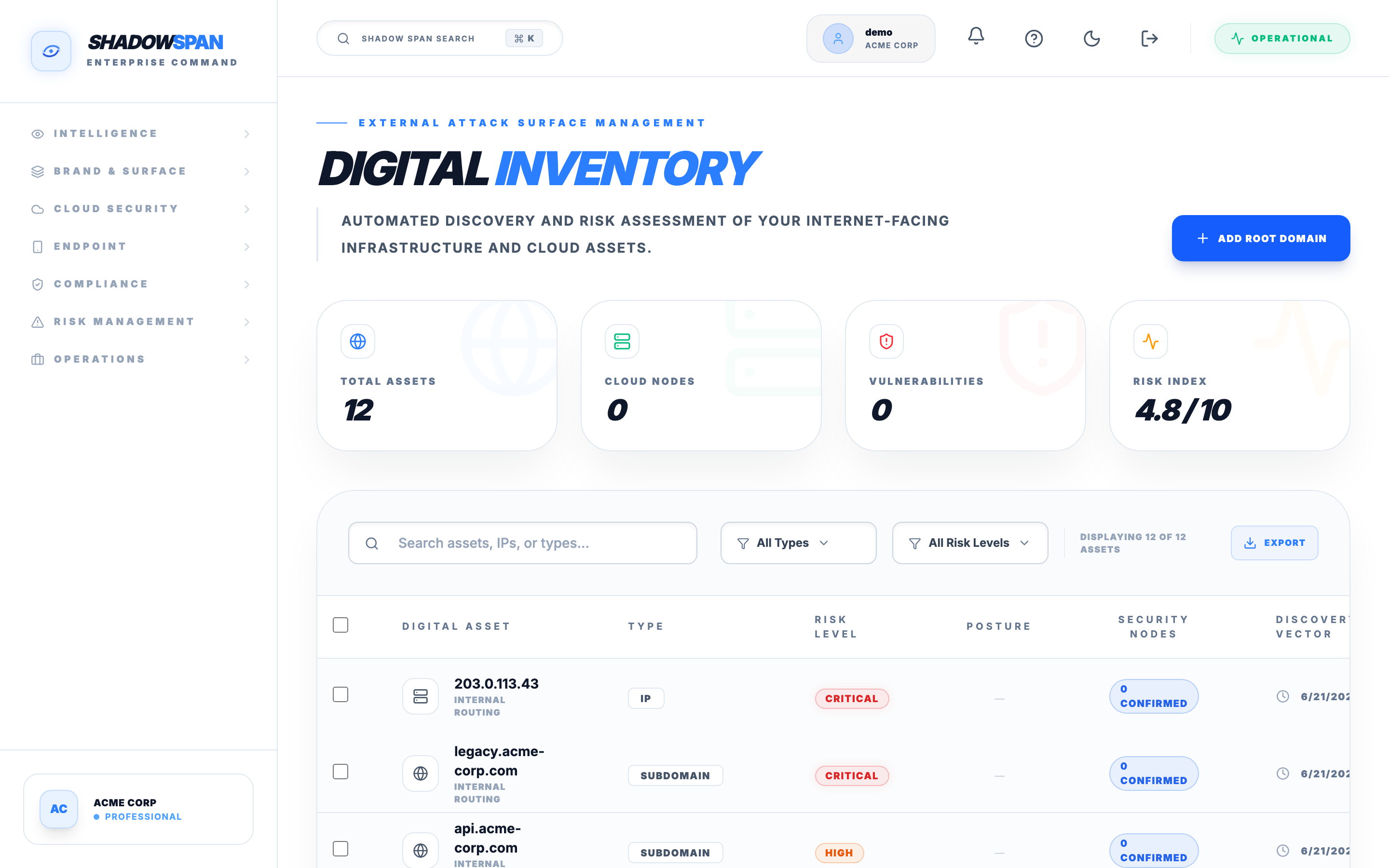
Fig. 01 — Discovered internet-facing assets, ranked by risk
01 · What you get
Subdomain enumeration
subfinder + crt.sh + DNS brute-force + Wayback, merged and deduplicated.
Service + tech fingerprint
nmap and HTTP fingerprinting detect stack, proxy/WAF and OS.
Posture scoring
DNS, TLS, headers, email, ports, subdomain-takeover and code-leak scorers.
Proxy-aware CVE match
CVEs matched to your detected stack, not the CDN sitting in front of it.
Certificate-transparency watch
New certificates for your domains, in real time.
Continuous re-scan
Nightly refresh of every active asset and its risk score.
02 · How it works
Register a root domain
Declare what you own; no fallbacks to unrelated domains.
Enumerate + fingerprint
Four enumeration sources plus port and HTTP fingerprinting.
Score + correlate
Per-asset posture scoring and proxy-aware CVE correlation.
Risk-rank
Assets ranked by exposure, exploitability and KEV.
EASM that feeds the same attack-path graph as your cloud and AppSec — and pairs with DAST so "potential" exposures become "confirmed exploitable."
Works with
Replace ten tools.
One invoice.
Stop paying up to $350K a year across fragmented point solutions. Get unified visibility, cross-module correlation and AI-powered insights from a single platform.